Install Os X El Capitan
. Source model (with components) September 30, 2015; 2 years ago ( 2015-09-30) 10.11.6 (15G19009) / January 23, 2018; 24 days ago ( 2018-01-23) Update method Platforms type and Apple Preceded by Succeeded by Official website at the (archived September 2, 2016) Support status Security updates and printer drivers only. Extended support to end this year, and iTunes support ends in next year. OS X El Capitan ( ) (version 10.11) is the twelfth of, 's desktop and operating system for computers. It is the successor to and focuses mainly on performance, stability and security. Following the landmark-based naming scheme introduced with, El Capitan was named after a in, signifying its goal to be a refined version of Yosemite. El Capitan is the final version to be released under the name OS X; its successor, Sierra, was announced as.
Sep 30, 2015 Here's a step-by-step guide to performing a clean install of OS X El Capitan using a bootable USB drive.
- The article, I am going to show you how to install Mac OS X 10.11 on PC. How to install Mac OS X El Capitan on PC, Install Mac OS X El Capitan without mac.
- It is now possible and remarkably easy to use OS X El Capitan on VMware following Apple’s live changing move geared towards improving its OS X software for desktop.
El Capitan received far superior reviews when compared to Yosemite. The first beta of OS X El Capitan was released to developers shortly following the 2015 keynote on June 8, 2015. The first public beta was made available on July 9, 2015. There were multiple betas released after the keynote. OS X El Capitan was released to end users on September 30, 2015, as a free upgrade through the. Contents. System requirements All Macintosh computers that can run, or can run El Capitan, although not all of its features will work on older computers.
For example, Apple notes that the newly available is available on 'all Macs since 2012'. These computers can run El Capitan, provided they have at least 2GB of RAM:.: Mid 2007 or newer.: Late 2008 or newer. White/Black: Early 2009 or newer.: All.: Late 2008 or newer.: 13-inch: Mid 2009 or newer.: 15-inch: Mid 2007 or newer.: 17-inch: Mid 2007 or newer, Late 2007 or newer.: Early 2009 or newer.: Early 2008 or newer.: Early 2009 Of these computers, the following models were equipped with 1GB RAM as the standard option on the base model when they were shipped originally. They can only run OS X El Capitan if they have at least 2GB of RAM.: Mid 2007.: Early 2008.: Early 2009 The following computers support features such as, between Mac computers and iOS devices, as well as the new:. iMac: Late 2012 or newer. MacBook: Early 2015 or newer. MacBook Air: Mid 2012 or newer.
MacBook Pro: Mid 2012 or newer. Mac Mini: Late 2012 or newer. Mac Pro: Late 2013 The upgrade varies in size depending upon which Apple Mac computer it is being installed on, in most scenarios it will require about 6 GB of disk space. Features OS X El Capitan includes features to improve the security, performance, design and usability of OS X. Compared to OS X Yosemite, Apple says that opening is four times faster, app switching and viewing messages in is twice as fast and launching apps is 40% faster.
The maximum amount of memory that could be allocated to the graphics processor has been increased from 1024 MB to 1536 MB on Macs with an. OS X El Capitan supports, Apple's graphics API introduced in to speed up performance in games and professional applications. Apple's typeface replaces as the system. OS X El Capitan also adopts in replacement of used in previous versions. Window management. An example of the split screen view in OS X El Capitan OS X El Capitan introduces support for creating a full-screen split view by pressing the green button on left upper corner of the window or Control+Cmd+F keyboard shortcut, then snapping any supported other window to that full screen application.
This feature is slightly similar to, although less extensive than, the snap-assist feature in (and later) and several, such as. OS X El Capitan improves to incorporate this feature across multiple spaces. It also enables users to spot the pointer more easily by enlarging it by shaking the mouse or swiping a finger back and forth on the. Applications Messages and Mail OS X El Capitan adds gestures to applications like Mail and that allow a user to delete or mark emails or conversations by swiping a finger on a multi-touch device, such as a trackpad.
OS X also analyzes the contents of individual emails in Mail and uses the gathered information in other applications, such as. For example, an invitation in Mail can automatically be added as a Calendar event. Maps in El Capitan shows public transit information similar to Maps in. This feature was limited to a handful of cities upon launch:, and Notes The application receives an overhaul, similar to Notes in iOS 9.
Both applications have more powerful capabilities, such as (like in the application), inline webpage previews, photos and videos, digital sketches, map locations and other documents and media types. Notes replaces traditional -based with, which offers better and faster syncing. Safari in El Capitan lets users pin tabs for frequently accessed websites to the tab bar, similar to and. Users are able to quickly identify and mute tabs that play audio without having to search for individual tabs. Safari supports video streaming to an without the need to broadcast the entire webpage. Are now hosted and signed by Apple as part of the updated Apple Developer program and they received native support for, allowing developers to block website components (such as advertisements) without injection.
The app also allows the user to customize the font and background of the Reader mode. Spotlight is improved with more contextual information such as the weather, stocks, news and sports scores. It is also able to process queries in natural language.
For example, users can type 'Show me pictures that I took in Yosemite National Park in July 2014' and Spotlight will use that request to bring up the corresponding info. The app could now be resized and moved across the screen. Photos introduced editing extensions which allows Photos to use editing tools from other apps. System Integrity Protection. Main article: OS X El Capitan has a new security feature called (SIP, sometimes referred to as 'rootless' ) that protects certain system, and from being modified or tampered with by other processes even when executed by the or by a user with root privileges. Apple says that the root user can be a significant to the system's security, especially on systems with a single user account on which that user is also the administrator. System Integrity Protection is enabled by default, but can be disabled.
Release history Version Build Date Notes Standalone download 10.11 15A284 September 30, 2015 15.0.0 Original Mac App Store release N/A 10.11.1 15B42 October 21, 2015 10.11.2 15C50 December 8, 2015 15.2.0. This section needs expansion. You can help. (October 2015) Upon release, OS X El Capitan was met with universal acclaim from both users and critics, with praise mostly going towards the overall functionality of the new features and improved stability. Dieter Bohn of awarded the operating system a score of 8.5 out of 10; while of was also positive, rating it 4.5 out of 5. Issues After the 10.11.4 update, many users started reporting that their MacBooks were freezing, requiring a.
This issue mostly affects Early 2015 computers, although many others have reported freezes in other models. Several users created videos in which showed the freezes. Soon after this, Apple released the 10.11.5 update, which contained stability improvements. Apple later acknowledged these problems, recommending their users to update to the last point release. After the December 13, 2016 release of Security Update 2016-003, users reported problems with the WindowServer process becoming unresponsive, causing the GUI to freeze and sometimes necessitating a hard reboot to fix.
In response, on January 17, 2017, Apple released to fix 'a kernel issue that may cause your Mac to occasionally become unresponsive' and at the same time released an updated version of Security Update 2016-003 which includes the fix released in the supplemental. Users who have not previously installed Security Update 2016-003 are advised to install the updated version to reach build 15G1217, while users who have already installed the December 13, 2016 Security Update 2016-003 only need to install the supplemental update. References. The Open Group.
From the original on October 15, 2015. Retrieved October 23, 2015.
Bonnie Cha. From the original on June 9, 2015. From the original on June 10, 2015. Retrieved June 8, 2015. Andrew Cunningham (July 9, 2015). From the original on May 25, 2017. Benjamin Mayo (September 30, 2015).
From the original on October 1, 2015. Keizer, Gregg (June 14, 2016). From the original on June 15, 2016. Retrieved June 14, 2016. ^ Cunningham, Andrew (June 8, 2015).
From the original on June 10, 2015. Retrieved June 10, 2015. Dhiraj, Rav (June 2015). (PDF) from the original on June 17, 2015. Retrieved June 17, 2015. Apple Support.
INDEX to All Tech Items On This Site The links below expand into over 3000 pages on site, plus hundreds of off site links, with picture tours of many of the special. A crankshaft—related to crank—is a mechanical part able to perform a conversion between reciprocating motion and rotational motion. In a reciprocating engine, it. A bolt of white cloth pdf converter. Bolt Of Cloth This fabric features a maroon and white plaid pattern. A bolt of plaid fabric. A Bolt of White Cloth has 2 available editions to buy at Alibris. Sign In / Create; Order Status; Track Your Order; Wishlist; Rental Return; Explore; Student. Free erasing the cloth from image downloads. Convert Png Psd Tiff to Pdf is a Pdf creator that allows.
September 20, 2016. From the original on June 21, 2017.
Mac Developer Library. June 8, 2015. From the original on June 11, 2015. Retrieved June 10, 2015. Cunningham, Andrew; Hutchinson, Lee (September 30, 2015).
Ars Technica. From the original on October 1, 2015. Retrieved September 30, 2015. Williams, Rhiannon (September 30, 2015). From the original on November 15, 2015.
Retrieved November 2, 2015. ^ (Press release).
From the original on June 8, 2015. From the original on June 24, 2015. Retrieved June 25, 2015. Increase in VRAM allocation for Intel HD Graphics 4000 GPU in Mac OS X 10.11 El Capitan (in Japanese). October 5, 2015. From the original on November 25, 2015. From the original on June 10, 2015.
Stinson, Liz (June 9, 2015). From the original on June 13, 2015. Retrieved June 13, 2015.
From the original on November 25, 2015. Retrieved October 24, 2015. OS X 10.11 ships with LibreSSL. From the original on June 9, 2015.
From the original on June 22, 2015. (Press release). From the original on June 22, 2015. Weinstein, Brian; Christensen, Alex (June 2015). Apple Developer. (PDF) from the original on June 20, 2015.
Retrieved June 19, 2015. The Mac Observer.
From the original on April 15, 2017. Retrieved April 14, 2017. From the original on June 9, 2015. From the original on January 3, 2017.
Retrieved January 2, 2017. From the original on November 28, 2016. Retrieved January 7, 2017. Cunningham, Andrew; Hutchinson, Lee (September 29, 2015). Ars Technica. From the original on September 30, 2015. Retrieved September 29, 2015.
Install Os X El Capitan Dmg
Cunningham, Andrew (June 17, 2015). From the original on June 19, 2015. Retrieved June 18, 2015. Slivka, Eric (June 12, 2015). From the original on June 19, 2015. Retrieved June 18, 2015. Martel, Pierre-Olivier (June 2015).
(PDF) from the original on June 19, 2015. Retrieved June 18, 2015.
Mac Developer Library. June 8, 2015.
At section OS X v10.11. From the original on June 11, 2015. Retrieved June 18, 2015. Bohn, Dieter (September 29, 2015). From the original on October 1, 2015.
Retrieved October 2, 2015. Snell, Jason (September 29, 2015). From the original on October 1, 2015. Retrieved October 2, 2015. Hardwick, Tim.
From the original on May 16, 2016. Retrieved May 14, 2016. MacRumors Forums. From the original on May 16, 2016.
Retrieved May 14, 2016. WannaKnowMyName (2016-04-21), retrieved 2016-05-14. Patrick Bright (2016-04-27), retrieved 2016-05-14.
mey han (April 5, 2016), from the original on April 8, 2017, retrieved May 14, 2016. From the original on July 6, 2016. Retrieved June 6, 2016. From the original on March 30, 2017. Retrieved March 30, 2017. From the original on March 30, 2017.
Retrieved March 30, 2017. External links. – official site Preceded by OS X Succeeded.
Editor’s note: We've updated this guide for the release version of El Capitan (OS X 10.11), which was released on September 30, 2015. When OS X shipped on a DVD a good number of years ago, you always had the convenience of a bootable installer—an OS X installer that could be used to boot your Mac if its own drive was having problems. But to install or reinstall a recent version of OS X, you must either download a non-bootable installer from the Mac App Store or (via OS X’s invisible, bootable ) download 6GB of installer data from Apple’s servers during the installation process. In other words, you no longer have the same safety net or convenience. Because of this, I recommend creating your own bootable El Capitan (OS X 10.11) installer drive on an external hard drive or USB thumb drive. If you need to install El Capitan on multiple Macs, using a bootable installer drive is faster and more convenient than downloading or copying the entire installer to each computer. If you want to erase the drive on a Mac before installing El Capitan, or start over at any time, you can use a dedicated installer drive to boot that Mac, erase its drive, and then install the OS (and subsequently restore whatever data you need from your backups).
And if your Mac is experiencing problems, a bootable installer drive makes a handy emergency disk. ( lets you repair your drive and reinstall OS X, but to perform the latter task, you must wait—each time you use it—for the entire 6GB of installer data to download. At best, that’s a hassle; at worst, it’s hours of waiting before you can get started.) As with previous versions of OS X, it’s not difficult to create a bootable installer drive, but it’s not obvious, either.
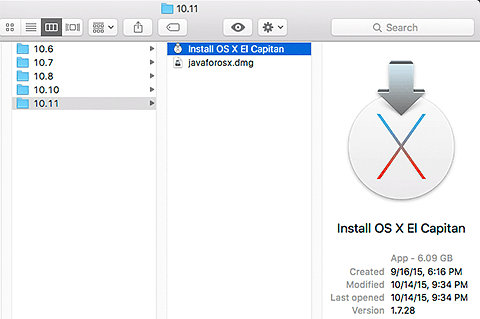
I show you how, below. Macworld also has bootable-install-drive instructions for, and. Keep the installer safe Like all recent versions of OS X, El Capitan is distributed through the Mac App Store: You download an installer app (called Install OS X El Capitan.app) to your Applications folder. In this respect, the OS X installer is just like any other app you buy from the Mac App Store. However, unlike any other app, if you run the OS X installer from that default location, the app deletes itself after it's done installing OS X. If you plan to use the OS X installer on other Macs, or—in this case—to create a bootable installer drive, be sure to copy the installer to another drive, or at least move it out of the Applications folder, before you use it to install the OS on your Mac.
If you don't, you'll have to redownload the installer from the Mac App Store before you can use the instructions below. What you need To create a bootable El Capitan installer drive, you need the El Capitan installer from the Mac App Store and a Mac-formatted drive that’s big enough to hold the installer and all its data.
This can be a hard drive, a solid-state drive (SSD), a thumb drive, or a USB stick—an 8GB thumb drive is perfect. Your drive must be formatted as a Mac OS Extended (Journaled) volume with a GUID Partition Table.
(Follow to properly format the drive if you're using OS X Yosemite or older. If you're using OS X El Capitan, use.) Your OS X user account must also have administrator privileges. Apple’s gift: createinstallmedia In my articles on creating a bootable installer drive for older versions of OS X, I provided three, or even four, different ways to perform the procedure, depending on which version of OS X you were running, your comfort level with Terminal, and other factors. That approach made sense in the past, but a number of the reasons for it no longer apply, so this year I’m limiting the instructions to a single method: using OS X's own createinstallmedia tool.
Os X El Capitan Download
Starting with Mavericks, the OS X installer hosts a hidden Unix program called createinstallmedia specifically for creating a bootable installer drive. Using it requires the use of Terminal, but createinstallmedia works well, it's, and performing the procedure requires little more than copying and pasting. The only real drawback to createinstallmedia is that it doesn't work under OS X 10.6 Snow Leopard—it requires OS X 10.7 Lion or later. Though it's true that some Macs still running Snow Leopard can upgrade to El Capitan, I think it’s safe to assume that most people installing OS X 10.11 will have access to a Mac running 10.7 or later.
Install Os X El Capitan Download
(If you absolutely refuse to go near Terminal, an, although I haven't yet had the chance to test it.) Making the installer drive. Connect to your Mac a 8GB (or larger) drive, and rename the drive Untitled. (The Terminal commands I provide here assume that the drive is named Untitled.
If the drive isn’t named Untitled, the procedure won’t work.). Make sure the El Capitan installer (or at least a copy of it), called Install OS X El Capitan.app, is in its default location in your main Applications folder (/Applications). Select the text of the following Terminal command and copy it. Note that the window that displays the command scrolls to the right. Sudo /Applications/Install OS X El Capitan.app/Contents/Resources/createinstallmedia -volume /Volumes/Untitled -applicationpath /Applications/Install OS X El Capitan.app. Launch Terminal (in /Applications/Utilities). Warning: This step will erase the destination drive or partition, so make sure that it doesn’t contain any valuable data.
Paste the copied command into Terminal and press Return. Type your admin-level account password when prompted, and then press Return. You may see the message “To continue we need to erase the disk at /Volumes/Untitled. If you wish to continue type (Y) then press return:” If so, type the letter Y and then press Return.
If you don't see this message, you're already set. The Terminal window displays createinstallmedia’s progress as a textual representation of a progress bar: Erasing Disk: 0%.
10 percent.20 percent. You also see a list of the program’s tasks as they occur: Copying installer files to disk. Copy complete.
Making disk bootable. Copying boot files. Copy complete. The procedure can take as little as a couple minutes, or as long as 20 to 30 minutes, depending on how fast your Mac can copy data to the destination drive. Once you see Copy Complete. Done., as shown in the screenshot above, the process has finished. Createinstallmedia will have renamed your drive from Untitled to Install OS X El Capitan.
You can rename the drive (in the Finder) if you like—renaming it won’t prevent it from working properly. Booting from the installer drive You can boot any El Capitan-compatible Mac from your new installer drive. First, connect the drive to your Mac.
Then, restart your Mac (or, if it's currently shut down, start it up) while holding down the Option key. When OS X’s Startup Manager appears, select the installer drive and then click the arrow below it to proceed with startup. (Alternatively, if your Mac is already booted into OS X, you may be able to choose the installer drive in the Startup Disk pane of System Preferences, and then click restart. However, sometimes OS X installer drives don't appear in the Startup Disk window.) Once booted from your installer drive, you can perform any of the tasks available from the OS X installer’s special. In fact, you'll see the same OS X Utilities screen you get when you boot into OS X Recovery—but unlike with recovery mode, your bootable installer includes the entire installer.